
CASE HISTORY – S.I.C.A. & DIGITRON ITALIA SRL Project Title: Upgrade and Digitalization of the Thermal Monitoring System at S.I.C.A. – Parma and Angri Offices
CASE HISTORY – SICA & DIGITRON ITALIA SRL
Project Title
Upgrade and Digitalization of the Thermomonitoring System at SICA – Parma and Angri Branches
Client
SICA – Experimental Station for the Food Canning Industry
Technology Provider
Digitron Italia Srl (in collaboration with FMB Engine Srl)
1. PROJECT INTRODUCTION
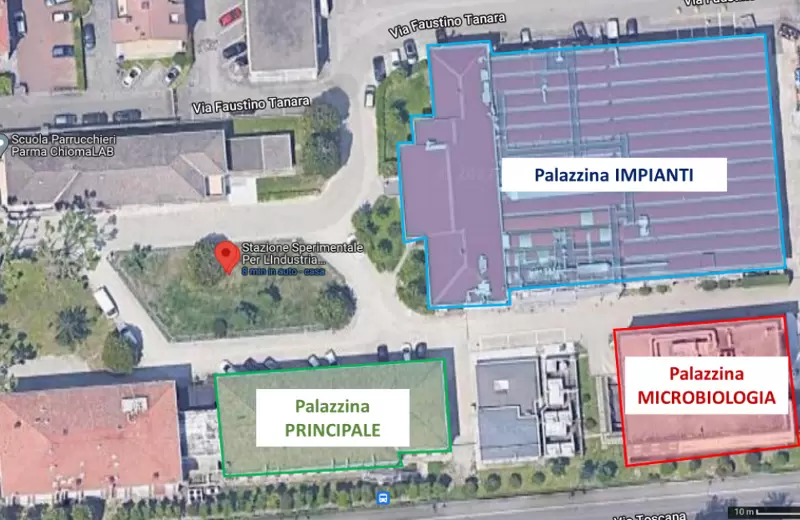
The project was initiated on May 10, 2022, with a technical visit to the SICA plant in Parma, attended by client representatives and Digitron Italia Srl. Since then, the project is still ongoing, with continuous remote support and assistance from Digitron, aimed at completing the implementation and refining the proposed system.
2. CONTEXT AND ANALYSIS OF THE EXISTING SYSTEM
The system in use at SICA's Parma and Angri branches was based on technology including sensors for temperature (T) and relative humidity (RH) detection. The system, although still operational, presented critical issues:
Detection reliability not always guaranteed at peripheral points
Obsolete software based on Flash, no longer supported
Difficulty in calibrating and managing probes
Complexity in scalability and integration with modern systems
3. CLIENT REQUIREMENTS
SICA expressed the need to replace the system while maintaining the basic architecture to reduce organizational impact and facilitate a smooth transition. The key requirements identified are:
Reuse of existing hardware (PT100 probes, thermocouples)
Multi-user and multi-level software, accessible via local network
Real-time data visualization (tabular/synoptic)
Automated alarm management via email/SMS
Simplified and traceable calibration
Regulatory compliance (21 CFR Part 11)
4. THE TECHNICAL PROPOSAL FROM DIGITRON ITALIA SRL
Digitron presented an integrated and modular solution, custom-developed for SICA, maintaining the logical scheme already adopted with Labguard®, but completely renovating the hardware and software elements.
Proposed Hardware
T/RH Probe: verification and reuse of existing sensors where possible
Calibration Probe: for internal, automated, and recognized calibrations
Local Concentrators: with buffer battery and wireless transmission (2.4 GHz)
Floor/Area Gateway: wireless collection and data transmission over Ethernet
Signal Repeaters: optional, to ensure optimal coverage
Virtual Server: for software installation and local network access
Supervision Software
Web-based, multi-language interface
Customizable alarms (pre-alarm, alarm, historical logging)
Automated and manual internal calibration
Multi-user management with configurable access levels
Automatic reporting (PDF) + export (.csv)
Email and SMS notifications
System status monitoring (disconnection or error events)
5. SENSOR DISTRIBUTION STRUCTURE
The solution was sized to cover over 20 critical environments, divided between 2 main locations:
Parma (PR) Branch
Sensory Analysis, Environment, Microbiology Laboratories
CED, Meat Area, Tomato Area
Angri (SA) Branch
Two macro-laboratory areas (in specification phase)
6. PROJECT STATUS
Phase 1 – Technical Audit (10/05/2022): Completed
Phase 2 – Technical-Economic Proposal: Sent and validated
Phase 3 – Data Collection (probes/floor plans): Ongoing
Phase 4 – Customization Software: Started in remote mode
Phase 5 – Remote assistance and support: Active (Monthly call with SSICA team)
The implementation is in a progressive phase, with continuous remote assistance to support SICA in all transition phases.
7. EXPECTED RESULTS
Increased system reliability
Automation of calibration operations
Enhanced data security and traceability
Reduced operational management times
Regulatory compliance and adherence to internal procedures
8. NEXT STEPS
Finalization and validation of probe list
Final software configuration on SICA virtual server
On-site installation and training planning
CONCLUSIONS
The project with SICA represents an example of a technological upgrade with low structural impact, aimed at bringing innovation, efficiency, and reliability to monitoring systems in the food and scientific sectors. Digitron Italia confirms, with this intervention, its expertise in providing customized technological solutions in the field of precision scientific instrumentation.